


Varicose veins (VV) is one of the most common diseases.The insidiousness of this disease lies in the fact that for many years pathological changes in the vessels practically do not make themselves felt, but they can quickly lead to the development of venous insufficiency, thrombophlebitis or trophic ulcers.To avoid this, you need to take care of your veins without waiting for serious symptoms of the disease to appear.
What are varicose veins?
Varicose veins are a larger-than-expected expansion of the lumen of the vein in a certain area.As a result, it becomes elongated and tortuous.In such a vessel, the blood flow becomes turbulent, which leads to stagnation, inflammation and blood clot formation.
Varicose veins can appear in almost any part of the body where these veins have valves that prevent blood from flowing back.
Varicose veins on the legs: stages of the disease
The first stage of varicose veins (compensation).The appearance of the veins on the legs is practically unchanged;only spider veins can be observed, or the characteristic tortuosity of individual vessels may appear.At the end of the day, he is sometimes worried about the slight swelling of the legs, fatigue, exhaustion and discomfort.
The duration of this phase is many years.If you start treatment at this time, you can significantly delay or completely prevent the progression of the disease.This stage is most favorable for conservative treatment.
The second stage of varicose veins (subcompensation).At this stage, cramps in the calf muscles may occur at night, the veins protrude more noticeably, and the limbs periodically ache.Swelling of the ankle joints can be observed almost continuously, but it disappears in the morning.In the area of the tibia, the skin acquires a brownish-purple hue.
This stage also lasts for years.Conservative treatment measures are no longer as effective as in the first stage, so doctors are increasingly recommending various surgical interventions here as well.The purpose of preventive measures is to ensure that the disease does not enter the decompensation phase for as long as possible.
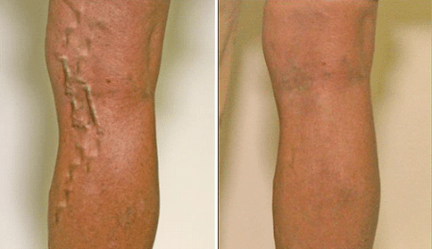
The third stage of varicose veins (decompensation).The veins bulge even more, the swelling does not go away in the morning, the skin in the shin area thins, and wounds appear that do not heal for a long time.The most dangerous complications usually develop at this stage:
- thrombophlebitis (thrombosis and inflammation of the veins);
- trophic dermatitis, ulcer;
- pulmonary embolism (the most dangerous complication, when the blood clot breaks in the lower limbs and enters the lungs with the blood flow, leading to respiratory arrest and death in 5-8 out of 10 people);
- chronic venous insufficiency (swelling and fatigue of the legs even if the problem of varicose veins has already been resolved).
At this stage, all therapeutic and preventive measures are aimed at preventing the development of complications and, if they have already appeared, at minimizing the consequences.
Which doctor treats varicose veins?
Phlebologist.This is a vascular surgeon who has a narrow specialty in the treatment of venous diseases.He is the one who treats varicose veins.
However, if there is no phlebologist in your area, or the consultation is extremely problematic, you can turn to a vascular surgeon for help, or, in your absence, simply to a general surgeon who provides outpatient visits.This is much better than simply letting the disease run its course.
How to treat varicose veins?
The treatment of varicose veins largely depends on the stage of the disease, the presence of complications and the specific clinical picture of the disease.

In the first stage, the main focus is on changing your lifestyle, giving up bad habits that aggravate varicose veins, and normalizing your body weight.In this case, patients can usually use folk remedies, treat with leeches, and take herbs.If the disease progresses, drugs are prescribed that increase the tone of the veins and improve the rheological properties of the blood, and compression clothing is worn.
In the second stage, drug therapy and compression clothing become mandatory, and if necessary, surgical intervention is performed.In order to prevent complications, an annual planned therapy in the hospital is recommended.
In the third stage, the choice of method is determined by the presence of complications and the general clinical picture of the disease.If serious complications occur, the patient should be hospitalized in the surgical department.
Treatment of varicose veins: what should be changed in your lifestyle?
Exercise.More than anything else, our arteries love to walk a lot.Standing or sitting work contributes to the development of varicose veins.Therefore, if you are forced to stand or sit for a long time, you should do special exercises every 40-50 minutes.
Habits.As you know, blood flows from the heels to the heart through the veins.Anything that pinches or pinches the blood vessels and surrounding tissue will impede the natural flow of blood and contribute to the progression of varicose veins.Therefore, already in the first stage of the disease, you should say goodbye to habits such as:
- sit in the "leg on the leg" position (blood flow is impaired at the level of the popliteal fossa, so it is better to change this to the American "leg on the leg" or "leg on the back of the chair" position);
- wear a tight belt, stockings, tights, belt, too tight jeans, tight underwear (partially pinching the vessels of the lumbar and knees, or due to the narrow waist, it does not allow breathing from the "belly", which almost excludes the diaphragm from the act of breathing, namely, it facilitates the flow of blood to the heart);
- overeating (overeating always leads to extra pounds, and any excess weight alone can lead to the development of varicose veins);
- A long walk in high heels (in this case, the load on the legs increases, and the part of the knee that promotes the upward movement of blood is almost disabled).